
Learning to Create without Performance
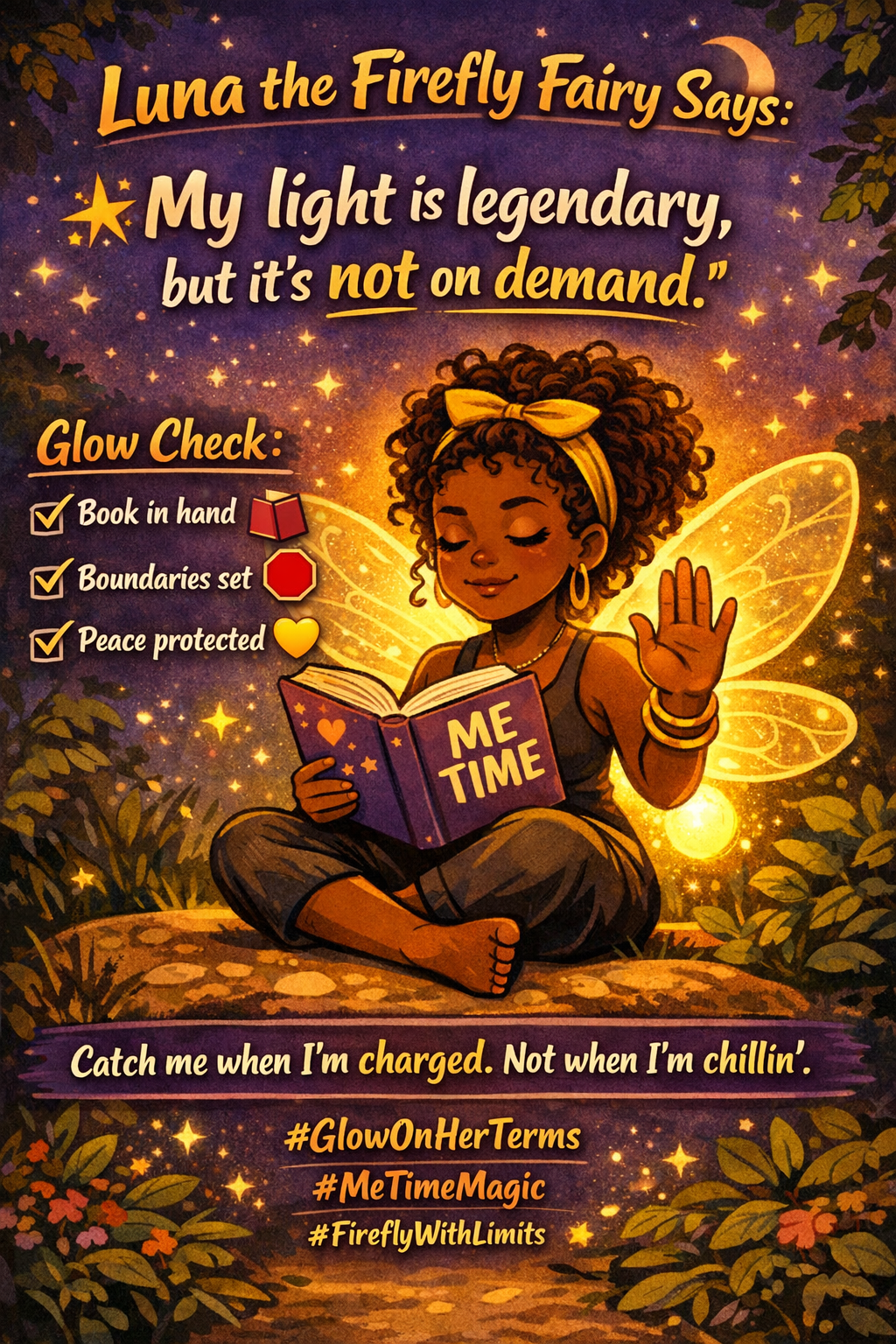
Luna didn’t just glow—she performed. Not intentionally, not at first. It started as something natural, something sacred even. A soft, steady light that pulsed from her without force. In the beginning, it was just enough to help her see where she was going, just enough to keep her warm in the dark. But then someone noticed. “Wow… can you come over here real quick? It’s kind of dark.” And Luna did. Then someone else asked. And another. And another. Soon, Luna wasn’t just lighting her own path—she was lighting rooms, lighting paths, lighting people who refused to carry their own lanterns. And because she was good at it, she kept going.
Luna became known as the one who could brighten anything, the one who always shows up, the one who makes it work. She was booked, busy, and brilliant—and also quietly drained. On this particular night, Luna was scheduled to glow in five different places. A last-minute favor here, a “quick” stop there, a situation that “only she could fix.” By the time she reached the fourth stop, her light flickered, just a little at first, enough that someone noticed.
“You okay? You seem dim tonight.”
Dim. Luna paused, because she wasn’t dim. She was depleted.
For the first time, Luna looked around and realized something unsettling. No one else was glowing. Not because they couldn’t, but because they didn’t have to. She had made herself the solution to everything. At the fifth stop, they were waiting, expectant, comfortable, certain she would show up like she always did—fully lit, fully available. Luna hovered just outside the space, and for the first time, she didn’t go in. She hovered there, light low but steady, and asked herself a question she had been avoiding for a long time: “If I stop glowing for them, do I disappear?” The answer came back quiet but clear: no, you just finally become visible to yourself.
So Luna did something radical. She dimmed her light on purpose, not out of exhaustion this time but out of choice, and then she turned and flew somewhere no one had scheduled her to be.
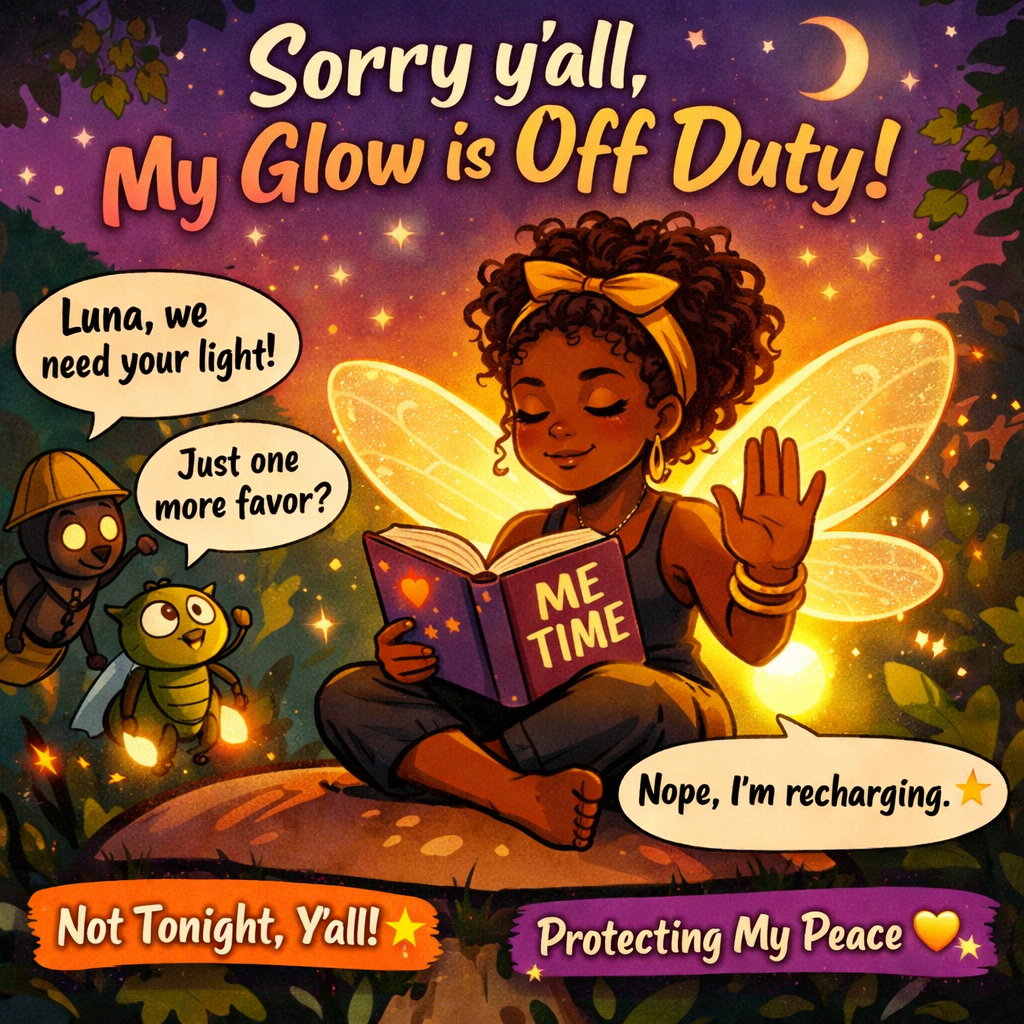
Luna isn’t just a firefly. She’s you, or at least a version of you that learned early on to be helpful, to be reliable, to be excellent, to be on. Somewhere along the way, that became being everything for everyone all the time. You start in a place where your gifts feel good and aligned, then people notice and begin to rely on you. Compliments quietly turn into expectations, and before long, you are the go-to, the dependable one who rarely says no. It feels good to be needed until it doesn’t. You find yourself stretched thin, still showing up, still producing, but no longer enjoying it. Then comes the flicker, the quiet irritation, the fatigue, the sense that something is off but you keep pushing anyway. Eventually, something gives, whether it’s your energy, your attitude, or your capacity altogether.
Where Are You in the Performance Cycle?
1. The Natural Glow – You’re operating in your gifts. It feels good. It’s aligned.
2. The Noticed Stage – People start relying on you. Compliments turn into expectations.
3. The Dependable Era – You’re now the go-to. You rarely say no. You feel needed and stretched.
4. The Overextension Loop – You’re tired, but still showing up. You’re producing, but not enjoying.
5. The Flicker – Irritation, fatigue, quiet resentment. You feel off, but you keep going.
6. The Breaking Point – You either shut down, or something forces you to.
The truth is, you didn’t just become over-relied on. You participated in it. Not because you’re weak, but because you’re capable. Capability without boundaries turns into silent permission for people to take and take, and for you to keep giving beyond your limits. The shift begins when you decide you don’t have to keep auditioning for a role you already outgrew.
How to Exit Stage Right (When the Pressure Goes Left)
1. Interrupt the Automatic Yes – Your first boundary isn’t no, it’s pause. “Let me get back to you” creates space, and in that space is your power.
2. Stop Pre-Volunteering Your Light – Not every need is yours to meet. Let people carry their own weight, even if it feels uncomfortable at first.
3. Do Something You Don’t Share – Create, enjoy, explore without documenting it. Let something belong only to you.
4. Expect Pushback (and Don’t Personalize It) – People will notice the shift. Their discomfort is not your responsibility.
5. Redefine What Good Means – Good is not always available or always excellent. Good might look like rested, selective, honest, and present.
6. Practice Intentional Dimming – You don’t have to burn out to stop. You can choose to give less and still be whole.
Luna didn’t lose her glow. She just stopped using it as currency. And when she did, her light didn’t disappear, it finally belonged to her again. If you feel yourself flickering, take this as permission to leave the stage mid-scene, without an announcement and without an apology.
The world will figure itself out, and in the meantime, you get to figure yourself out.
I am Eryka.
 Eryka W. Jackson | The Brand Ambassador
Leave a comment